
We get this question a lot: "Do I need a retaining wall or just a garden wall?" The answer depends on what the wall actually needs to do. One holds back earth. The other frames a garden bed. Choosing the wrong type can mean wasted money, failed walls, or even code violations. Here is the honest breakdown.
The Core Difference: Structure vs. Decoration
A retaining wall is a structural wall. Its job is to hold back soil on a slope or grade change. Without it, that soil would slide, erode, or collapse downhill. Retaining walls bear lateral earth pressure, which means they need proper footings, drainage, and in many cases engineering.
A garden wall (also called a freestanding or landscape wall) is decorative. It defines borders, edges flower beds, or creates raised planters. It does not hold back a slope — the soil level is roughly the same on both sides. Garden walls are shorter, lighter, and simpler to build.
The distinction matters because structural walls fail when they are built like decorative ones. We have torn out collapsed walls around Plymouth where someone stacked block against a slope with no gravel backfill and no drain tile. That is an expensive mistake.
When You Need a Retaining Wall
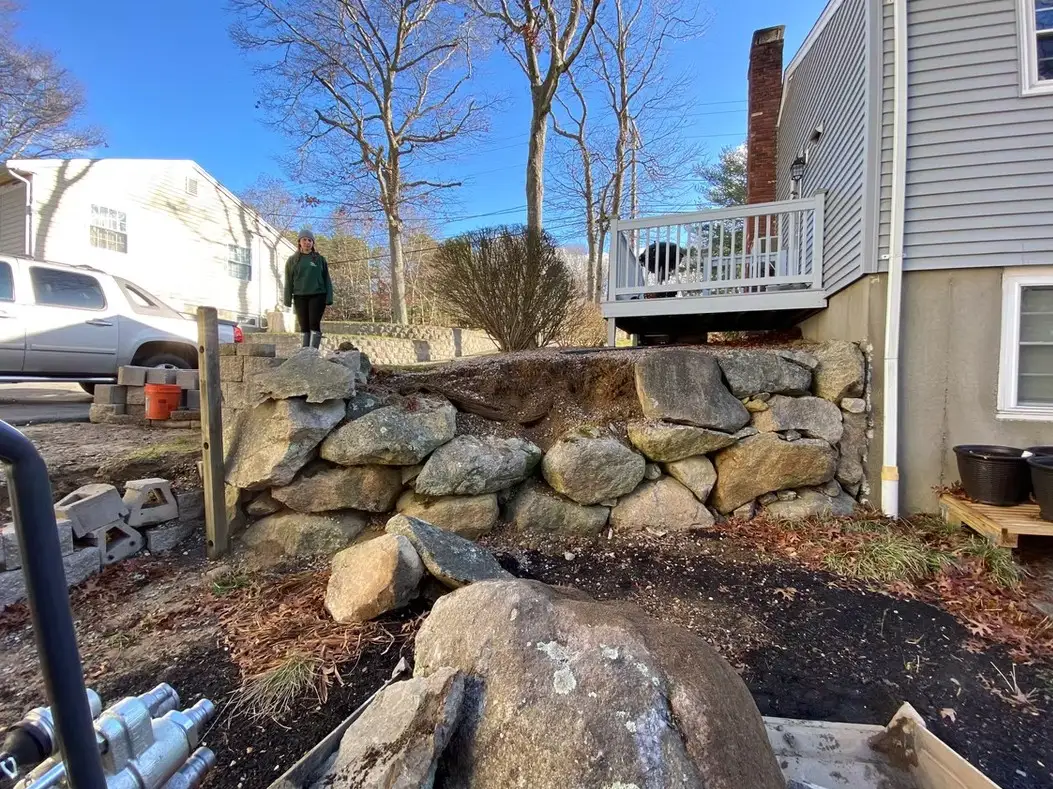
You need a retaining wall any time there is a meaningful grade change on your property and you want to prevent soil movement. Common situations in Plymouth include:
- Sloped yards — Creating level terraces for a patio, lawn, or garden on hilly terrain.
- Driveway edges — Holding back soil along a driveway that sits below grade.
- Foundation protection — Diverting water and soil pressure away from your home's foundation.
- Erosion control — Stopping washouts on properties near Plymouth's coastal bluffs or on sandy glacial soil.
Plymouth's soil is mostly sandy and glacial — it drains fast but also erodes quickly on slopes, especially during spring snowmelt and nor'easters. Add freeze-thaw cycles from November through March, and an improperly built wall will shift or lean within a couple of seasons. That is why drainage behind retaining walls is not optional here. Every wall we build includes crushed stone backfill and perforated drain tile at the base.
If you want to learn more about our approach, see our retaining wall installation page.
When a Garden Wall Is Enough
A garden wall works when the ground is relatively flat and you want to define a space. Think raised flower beds, herb gardens, a low border around a patio, or a decorative accent at the front of the house. Garden walls are typically under 2 feet tall and do not bear lateral soil load beyond what sits inside the planter.
Because garden walls are not structural, you have more flexibility with materials. Natural fieldstone stacked dry, thin veneer over block, even timber borders — all work fine.
Materials Comparison
Both wall types use similar materials, but the engineering requirements differ.
- Concrete block (segmental units) — The most common choice for retaining walls. Interlocking blocks like Versa-Lok or Techo-Bloc provide engineered setback and connection, handle serious loads, and come in a range of textures. For garden walls, smaller decorative block works well.
- Natural stone — Fieldstone, granite, and bluestone look great in garden walls. For retaining walls, natural stone requires more skill — stones need to be set tightly with proper batter (lean-back angle) and drainage. It costs more in labor but the result is timeless.
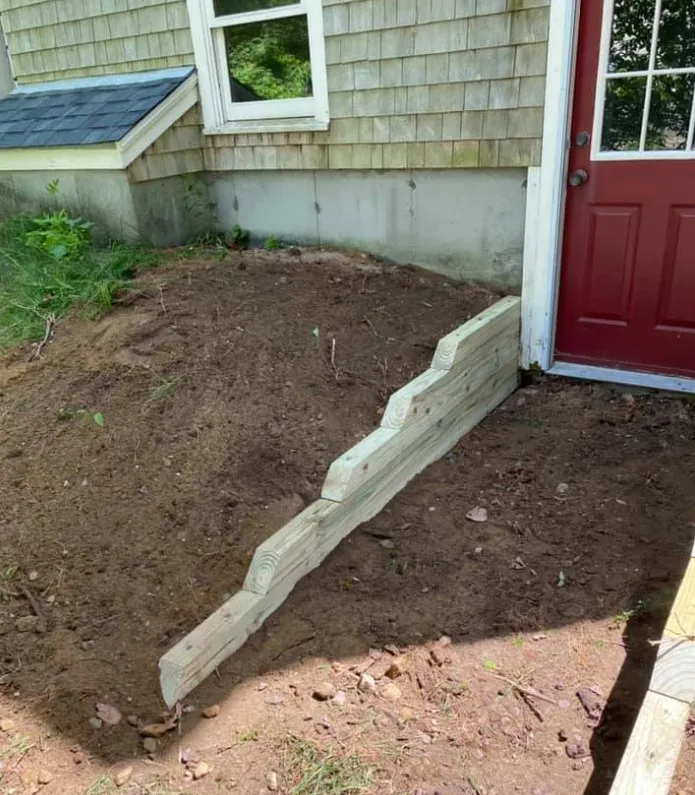
- Pressure-treated timber — Economical for low retaining walls under 3 feet and wooded settings. The trade-off is lifespan — even treated timber rots in 15 to 20 years in Plymouth's wet climate. We usually recommend block or stone for anything meant to last.
Drainage Requirements
This is the biggest practical difference between the two wall types.
Retaining walls must have drainage. Water buildup creates hydrostatic pressure — the single most common reason retaining walls fail. Every retaining wall needs a perforated drain pipe at the footing, wrapped in filter fabric, with 12 inches or more of crushed stone behind the wall. In Plymouth's sandy soil, water moves fast, so getting it away from the wall and daylit to a safe outlet is critical.
Garden walls need basic drainage inside a raised bed (weep holes or gaps at the base) but nothing close to the engineered drainage a retaining wall requires.
Building Codes & Permits in Plymouth MA
In Plymouth, retaining walls over 4 feet tall (measured from footing to top) require a building permit and typically need stamped engineering plans. Walls near property lines, wetlands, or flood zones may trigger additional review from the Conservation Commission or Zoning Board.
Garden walls under 2 feet generally do not need a permit, though setback rules still apply. If you are unsure, Plymouth's Building Department can confirm requirements. We handle the permit process for clients when engineering is needed.
Cost Comparison
Costs vary by materials, wall height, site access, and soil conditions. Here is a general comparison for Plymouth-area projects:
| Factor | Retaining Wall | Garden Wall |
|---|---|---|
| Purpose | Structural — holds back soil | Decorative — borders and planters |
| Typical Height | 2–6 feet (can be taller with engineering) | 1–2 feet |
| Drainage | Required — drain tile and crushed stone | Basic weep holes or gaps |
| Footing | Compacted gravel base, often 6–12" deep | Leveled gravel or compacted soil |
| Permit (Plymouth) | Required over 4 feet | Generally not required |
| Cost per linear foot | $50–$150+ (varies by height and material) | $20–$50 |
| Best materials | Segmental block, natural stone, timber | Fieldstone, decorative block, brick |
The biggest cost driver for retaining walls is height. A 2-foot wall is straightforward, but a 5-foot wall needs significantly more excavation, gravel, and possibly geogrid reinforcement. For garden walls, cost is mostly driven by material choice — natural stone costs more than block but looks beautiful in a cottage or coastal landscape.
How to Assess Your Property
Walk your property and look at the area where you want a wall:
- Is there a noticeable slope or grade change? If the ground is higher on one side, you need a retaining wall.
- Is the ground roughly level and you just want to define a bed or border? That is a garden wall.
- Is soil washing away during rainstorms? That signals erosion and calls for a retaining wall with drainage.
- Will the wall be taller than 2 feet? Plan for retaining wall methods even if the slope seems mild.
If you are not sure, have someone come look at it. Soil conditions in Plymouth vary — the sandy outwash plains near the Pinehills drain differently than the clay pockets closer to the harbor. A quick site visit tells us more than a dozen photos.
The Bottom Line
If your property has a slope and you need to hold back earth, you need a retaining wall — built right with proper drainage and footings. If you want to add raised beds, edge a walkway, or frame a garden on flat ground, a garden wall will do the job at a fraction of the cost.
Either way, getting the foundation and drainage right from the start saves you from expensive repairs later. We have seen too many walls around Plymouth built without gravel backfill or drain tile that had to be torn out within five years.
Check out our completed wall projects in the project gallery, or reach out for a free quote. We will walk your property, assess the slope and soil, and recommend the right wall for your situation.